Monsoon & storm season
Get your roof ready
before the storm hits.
Monsoon season brings fast-moving hail and wind to New Mexico most summers, and it rarely gives much warning. Here is what actually helps before the season starts, what to do while a storm is happening, and how to protect your home and your insurance claim once it passes.
Before the season
Get ready while the roof is dry.
The best time to deal with a roof problem is before it is raining. These are the things worth doing every spring, ahead of the first summer storm.
Book a roof inspection before the first storm
A dry-weather inspection catches loose flashing, worn sealant, and tired fasteners while there is still time to fix them, instead of finding out during a downpour. See roof maintenance for what a visit actually covers.
Clear canales, gutters and drains
Standing water finds every weak spot on a roof. Clogged canales, gutters, scuppers and valleys are the most common reason a roof that was fine last year leaks this year, so clear them before the first heavy rain, not after.
Cut back overhanging tree limbs
A branch that scrapes the roof in a light breeze can punch through it in a real gust. Trim anything hanging over the roofline while it is calm outside.
Photograph your roof and ceilings now, while everything is dry
A dated set of before photos, taken from the ground and from inside, gives you something concrete to compare against if a storm does cause damage later.
Know your wind and hail deductible before you need it
Many New Mexico homeowner policies handle wind and hail damage differently than the rest of the policy. Pull your declarations page and find that number now, while there is no pressure and no adjuster on the phone. See insurance claims for how a storm claim actually plays out.
Ask about automatic seasonal documentation
A membership that photographs and inspects your roof on a set schedule means your storm-readiness record already exists before the season starts, instead of being something you scramble to put together after the fact. See Paramount Care.
If a replacement is due anyway, ask about impact-resistant shingles
If your roof is already near the end of its life, doing the replacement before monsoon season with an impact-rated system means this year’s hail is the first storm the new roof shrugs off instead of the last one the old one survives. See impact-resistant roofing.
During a storm
Stay safe while it is happening.
Nothing on the roof is worth getting to during an active storm. Here is what actually helps while the weather is bad, and what can wait until it clears.
Stay inside and off the roof
A wet roof is genuinely dangerous, and reaching a problem spot from a ladder in wind and rain is not worth it. Whatever is happening up there can wait until the storm passes.
Move away from windows and skylights
Hail and wind-driven debris are the real hazard during an active storm, not the roof itself. Keep some distance from glass until it eases up.
Cut power to a circuit before water reaches it
If water starts reaching a light fixture, an outlet, or exposed wiring, switch that circuit off at the breaker before you do anything else. Water and electricity together are the danger, not the leak by itself.
Drain a bulging ceiling in one controlled spot
If a patch of ceiling is swelling with trapped water, puncture it over a bucket so it lets go in one place instead of collapsing across the room. Stand to the side while you do it.
Catch what you can and protect what’s below
Set buckets or towels under an active drip and move furniture and valuables out of the path of the water. It buys time until the weather clears.
Photograph what you can safely see from inside
Interior stains, drips and anything visible from the ground are worth a quick photo as they happen. That is the timestamp that backs up your claim later.
Call rather than climb up to look
If wind tears open a section of roof, a limb punches through, or water is actively coming in, that is worth calling about right away rather than waiting for a scheduled visit. See emergency roof repair for what counts as urgent.
After the storm
Protect your home and your claim.
What you do in the first day or two after a storm shapes how smoothly the repair and the claim go. Here is the order that protects you.
Walk the exterior from the ground and photograph everything
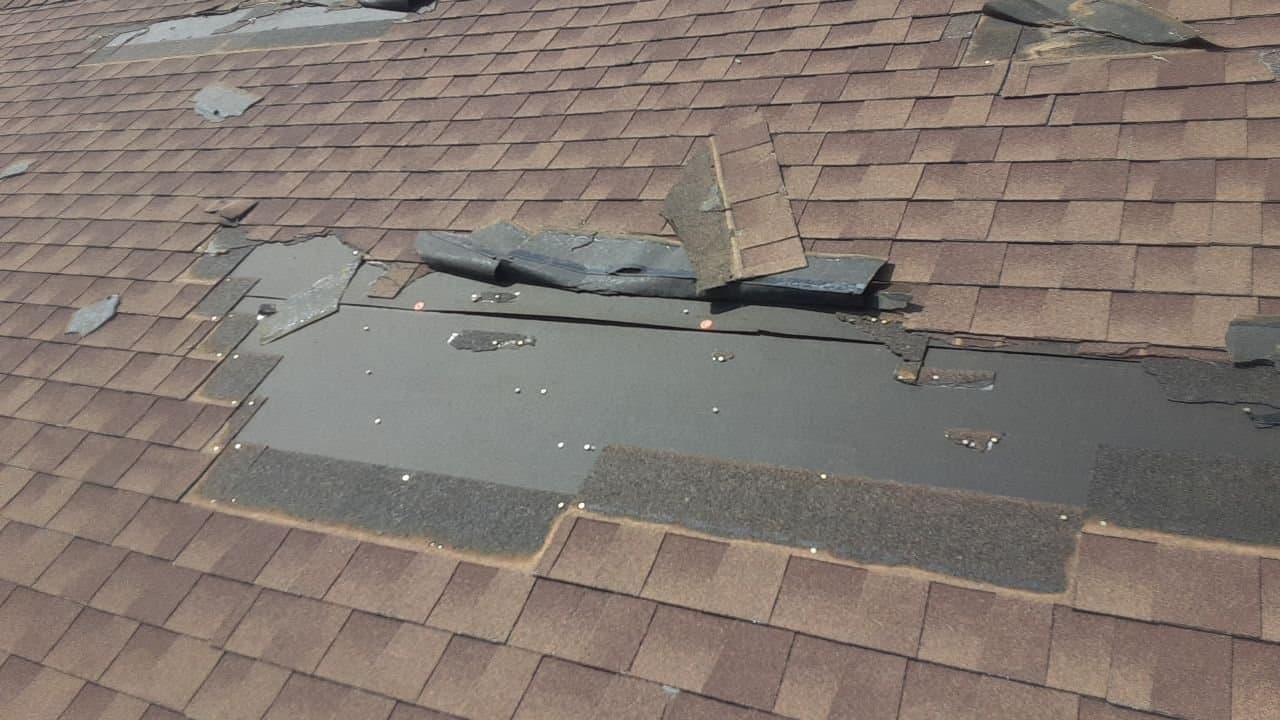
Dented gutters and vents, granules pooled below the eaves, torn shingles, debris in the yard, and any interior staining are all worth a dated photo before anything gets cleaned up or repaired.
Do not sign anything with a door-knocker
Storm-chasing crews work a neighborhood hard right after a hailstorm and push same-day contracts. Wait for a licensed, local roofer to actually get on your roof before you sign anything or hand over your insurance details.
Get an inspection on the calendar promptly
Most policies expect storm damage to be reported within a reasonable window, and the longer the gap between the storm and the inspection, the harder it is to tie damage to that specific event. See insurance claims for the full process.
Get it in writing before you file
A written inspection report that says what is damaged, where, and why it traces back to the storm is what lets your claim match what is actually on the roof, rather than relying on a verbal description.
If a leak got ahead of you, ask for a tarp
A bucket relay is a stopgap, not a fix. Stabilizing the opening stops more water from getting in while the full repair gets scheduled. See emergency roof repair.
Learn what a roofer is actually looking for
Our guide to spotting storm and hail damage walks through what hail bruising and wind lift actually look like, and what is safe to check from the ground versus what needs a professional eye.
Questions
Storm season, answered.
Should I wait until I see damage, or get ahead of the season?
Is it ever safe to check my own roof during a storm?
Will my homeowners insurance cover storm damage to my roof?
Ready before the next storm rolls in?
Start with a free inspection so you know exactly where your roof stands before monsoon season, not after it.