Roofing Guide
How to Spot Storm and Hail Damage on Your Roof.
A plain-English guide to recognizing hail and wind damage on your roof, what you can safely check yourself, and when to act versus monitor.
Paramount RoofingLicensed roofing contractor, NM GS-21 #4001135 min read
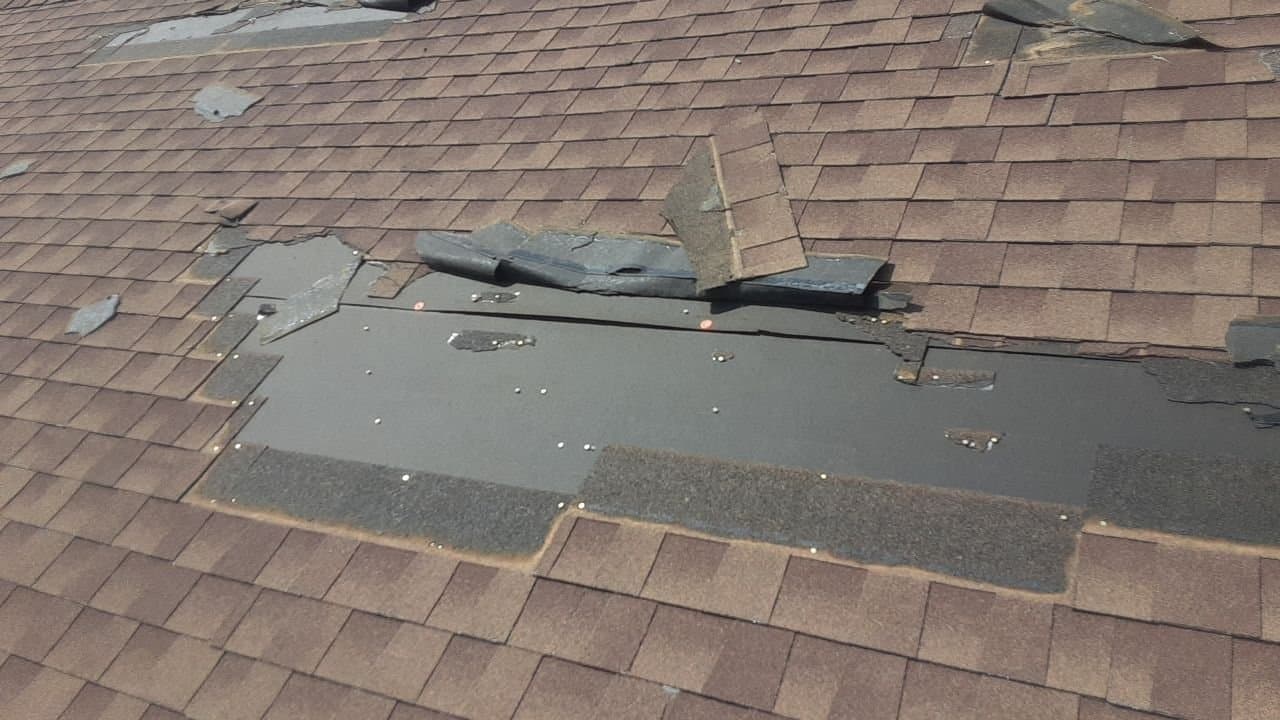
After a hard storm, most roofs look fine from the driveway. That is the problem. Hail and wind damage is often subtle, and the worst of it sits where you cannot see it. By the time a stain shows up on your ceiling, the damage has usually been working on your roof for a while.
Here in the high desert, the main culprits tend to arrive in monsoon season, roughly the summer months, when fast-moving storms bring hail and strong gusts. This guide walks through what those storms typically do to a roof, what you can check on your own without climbing up, and how to tell whether you should act now or simply keep an eye on things.
What Hail Actually Does
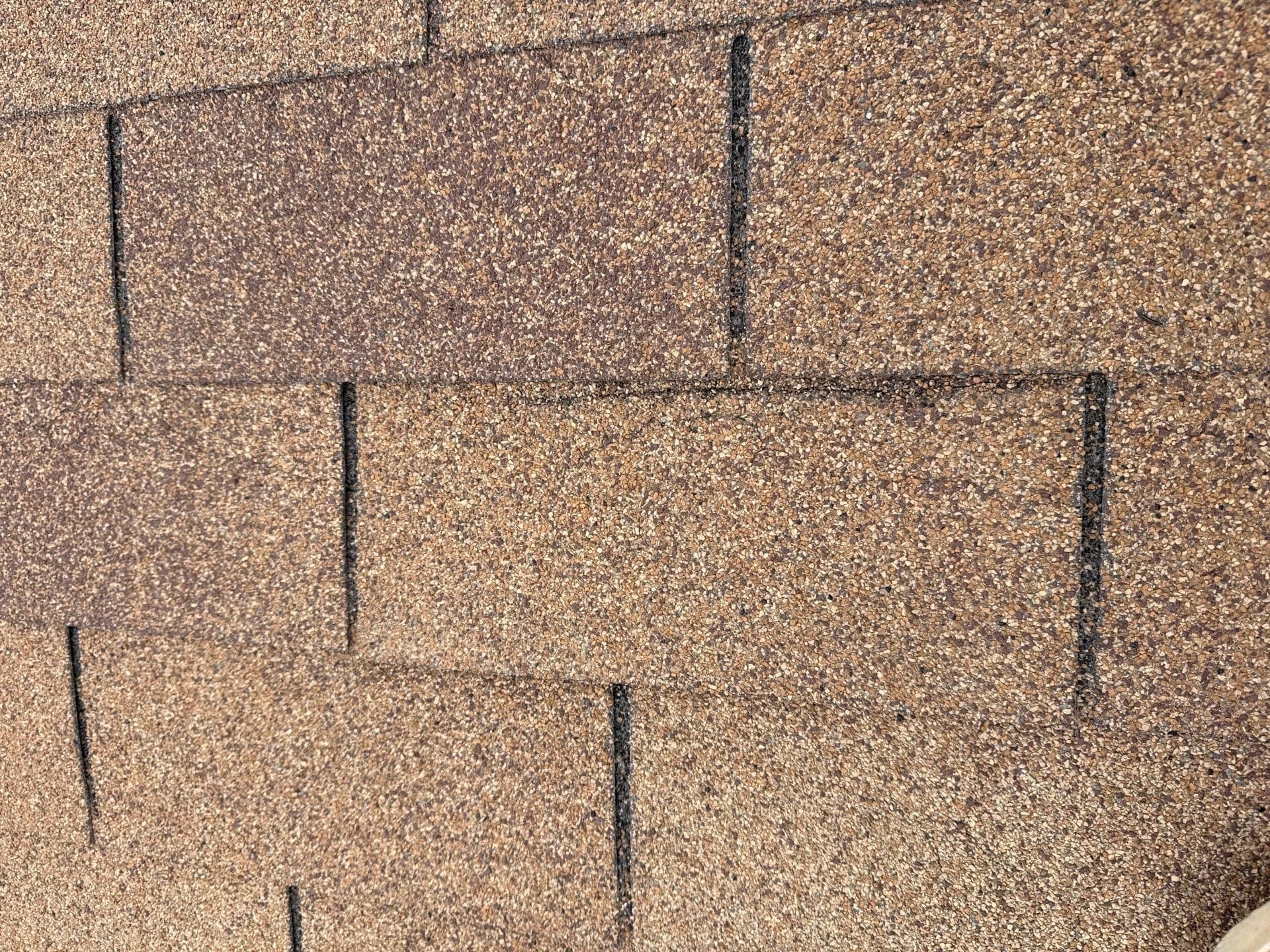
On asphalt shingles, hail rarely punches a clean hole. More often it bruises the shingle, leaving a soft spot where the protective surface granules have been knocked loose. Lose enough granules and the asphalt underneath is exposed to the sun. At high elevation, that intense UV bakes the bare spot and tends to speed up the breakdown long after the storm has passed.
The easiest early tell is often not the shingles at all. It is the soft metal around your roof. Hail tends to leave visible dents and dings in gutters, downspouts, vents, valley metal, and flashing. If those metal surfaces are pocked, the shingles likely took hits too, even if you cannot see them from the ground.
What Wind Does
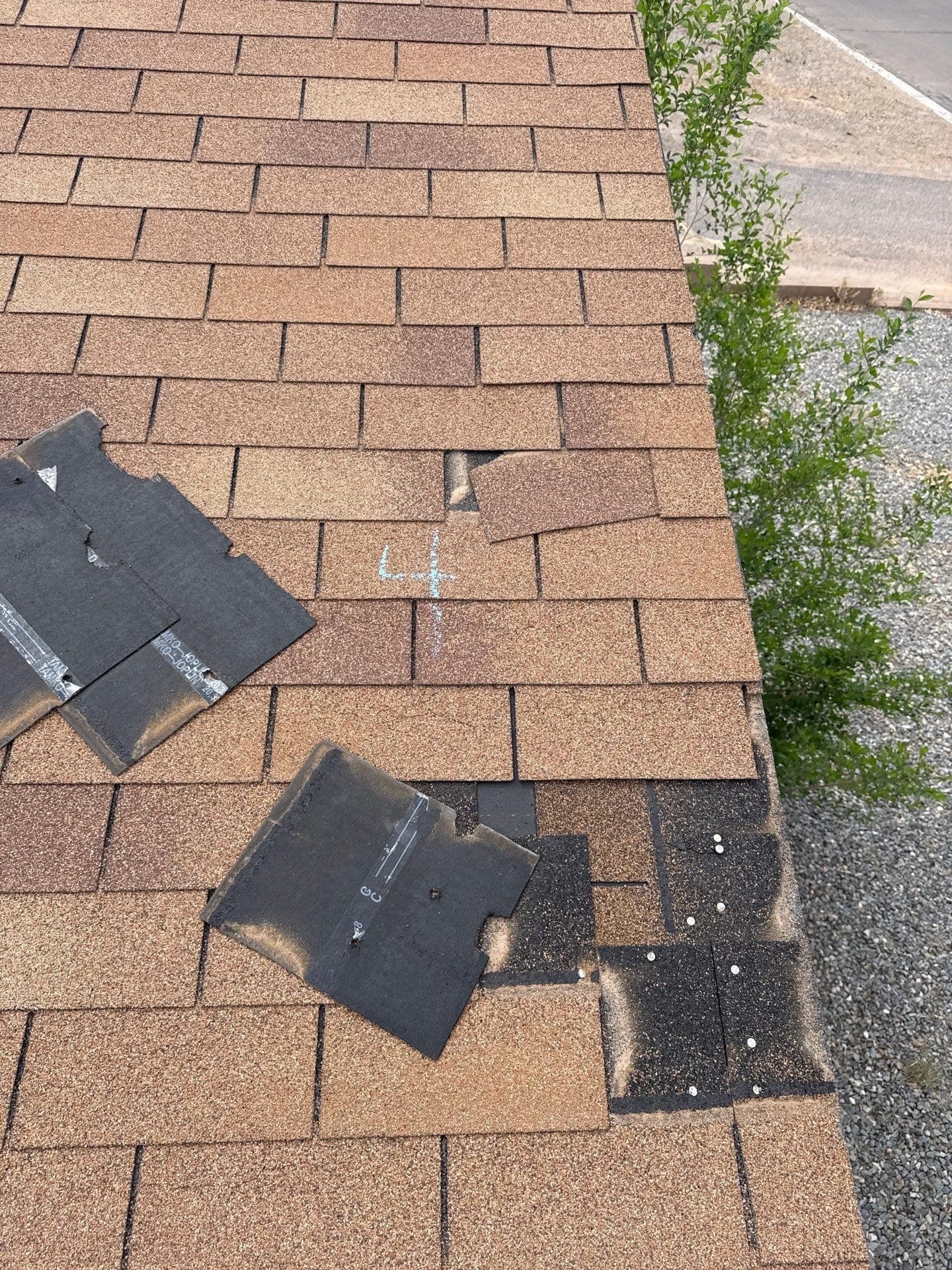
Wind works differently. It pries at the edges of shingles, lifting and creasing them and breaking the seal that holds each row down. A shingle can look flat again once the wind stops but still be loose, which lets rain blow underneath. Strong gusts also crack shingles outright or tear them off completely, and they fling branches and debris that can gouge the surface.
From the ground or an upstairs window, here is what wind damage tends to look like:
- Shingles that are lifted, curled, or crooked compared to their neighbors
- Horizontal crease lines across shingles where they were bent back and forth
- Bare or missing shingles, often leaving a darker patch behind
- Exposed or popped nail heads
- Shingle pieces, granule piles, or debris collected in the yard or gutters
Signs You Can See From Inside
Your attic and ceilings often confirm a problem before the roof does. Look for brown or yellow water stains on ceilings and upper walls, especially near corners and light fixtures. In the attic, check for damp or matted insulation, dark streaks on the wood, or any pinpoint of daylight coming through the deck. Daylight where there should be none usually means there is an opening for water too.
A small stain is worth taking seriously. Water travels along framing before it drips, so the wet spot inside is rarely directly below the leak above it. The visible mark is usually smaller than the actual problem.
Check Safely, and Why the Roof Is Off Limits
You can learn a lot without leaving the ground. Walk the perimeter and look up. Use binoculars if you have them, scan the gutters and metal for dents, check the yard for debris and granules, and look out of upstairs windows at the roof planes you can see. That is the safe zone.
Do not walk the roof yourself. Roofs are steep and slick, and storm damage creates loose shingles and soft spots you cannot predict. Beyond the fall risk, walking on shingles can crush granules and create damage that was not there before. The up-close inspection is better left to a roofing professional, who is equipped to get on the roof safely and knows what to look for, which is why a ground-level look is usually where a homeowner should stop.
Act Now or Monitor
Some things need attention right away. An active leak, visible daylight in the attic, missing shingles, or debris that punched through the surface can let water in now, and the next storm will often make it worse. Fresh hail bruising is sneakier. It may not leak today, but UV and the following storms keep wearing at the weak spots, so damage that looked minor can open up over a season.
Whatever you find, document it. Take dated photos of the metal dents, any debris, the interior stains, and note the storm date itself. Many insurance policies expect storm damage to be reported within a reasonable window, so it is generally worth acting promptly rather than waiting to see if it gets worse. Your own carrier and policy spell out the specifics, so check those for the actual deadlines and steps.
If everything checks out from the ground and nothing shows up inside, monitoring is a perfectly reasonable call. Not every storm causes damage that needs fixing. The goal is simply to know what you are looking at, so a small problem gets caught while it is still small.
Related on this site
Want a straight answer on your roof?
A free estimate is the simplest way to find out where your roof really stands. We take a look, document what we find, and tell you straight.
4.9★ · 200+ Google reviews · Licensed, bonded & insured · NM GS-21 #400113