TPO Walkway Pads.
Heat-welded pads that create durable foot-traffic paths on flat and TPO roofs, so service calls to rooftop equipment don’t slowly destroy your membrane.
4.9200+ Google reviewsLicensed, bonded & insured · NM GS-21 #400113Owens Corning Preferred Contractor10-yr workmanship warranty
Overview
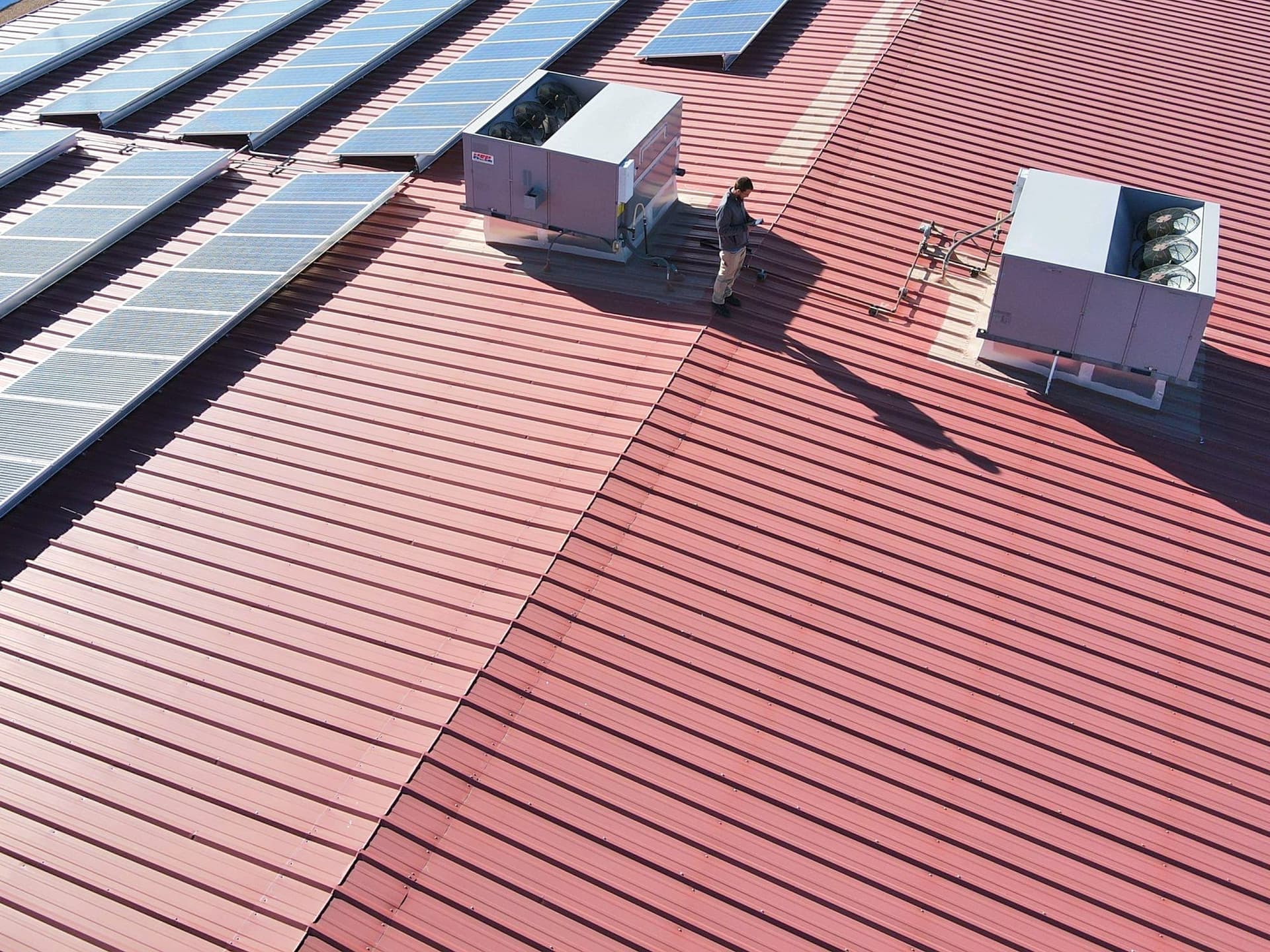
Flat and low-slope (nearly flat) roofs in New Mexico almost always have rooftop equipment: evaporative coolers, HVAC units, solar inverters, exhaust fans. Every service visit means someone walking across the TPO membrane (the single-ply rubber-like sheet that makes up a flat roof), and TPO isn’t built to be walked on. Steps in the same path, over and over, crush and scuff the surface, and the damage stays hidden until it leaks.
Walkway pads solve this. They’re factory-made TPO pads, the same material as your roof, heat-welded right to the membrane so they become part of it. They won’t slip, blow off, or leave the membrane exposed at the edges. We lay them in a straight run from the access hatch or ladder to each piece of equipment, so every HVAC tech, cooler crew, or inspector has a clear, protected path.
New TPO roofs and sound existing ones
Pads go down with a new TPO roof, or get welded onto a membrane that’s still in good shape during a service visit. Either way the same crew that installs and maintains the membrane makes the weld, so nobody is heat-welding to a roof they’ve never seen.
What’s involved
Heat-welded, not loose-laid
Each pad is hot-air welded to your TPO membrane the same way the seams are welded on a new roof. The bond is permanent and seamless: the pad can’t be kicked loose, shift in the wind, or trap water underneath.
TPO-to-TPO compatibility
Walkway pads are made from the same TPO material as the membrane below. That match is what makes a reliable weld possible, and it means the pad expands and shrinks with the roof through New Mexico’s temperature swings instead of fighting it.
Routed to every service point
We map the paths before we start: access hatch to each cooler, each HVAC unit, each spot that gets serviced regularly. A pad that ends two feet short of the equipment makes the tech step off anyway, which defeats the purpose.
Compatible with new installs and existing roofs
Walkway pads can be added when we install a new TPO roof, or welded onto a solid existing membrane during a service visit. The only catch is that the membrane has to be clean, intact, and in good enough shape to hold a weld.